Nature's manifestations are infinite and endlessly fascinating.
Nature is the ultimate source of inspiration and beauty.
Man's place in nature is not outside of it, but as an integral part of the natural world.
The study of nature is not limited to the realm of facts and figures, but also encompasses the realm of aesthetics and emotions.
Ernst Haekel
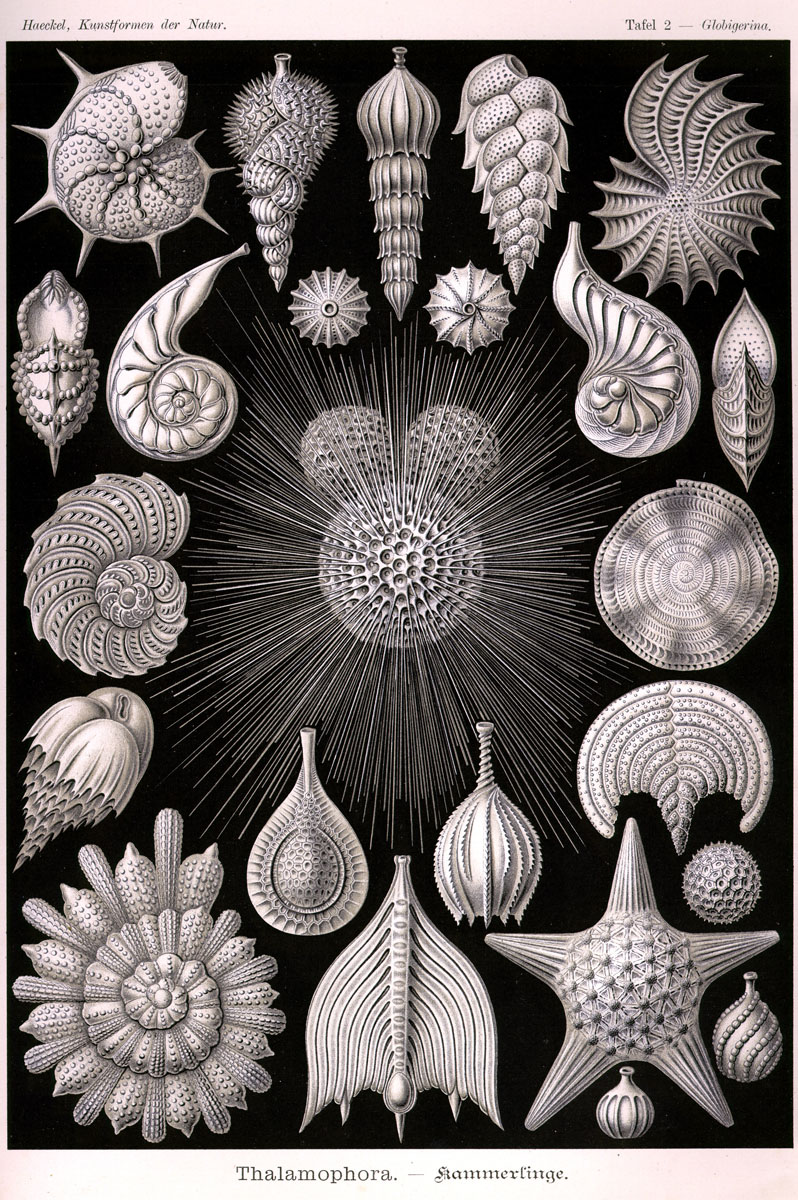
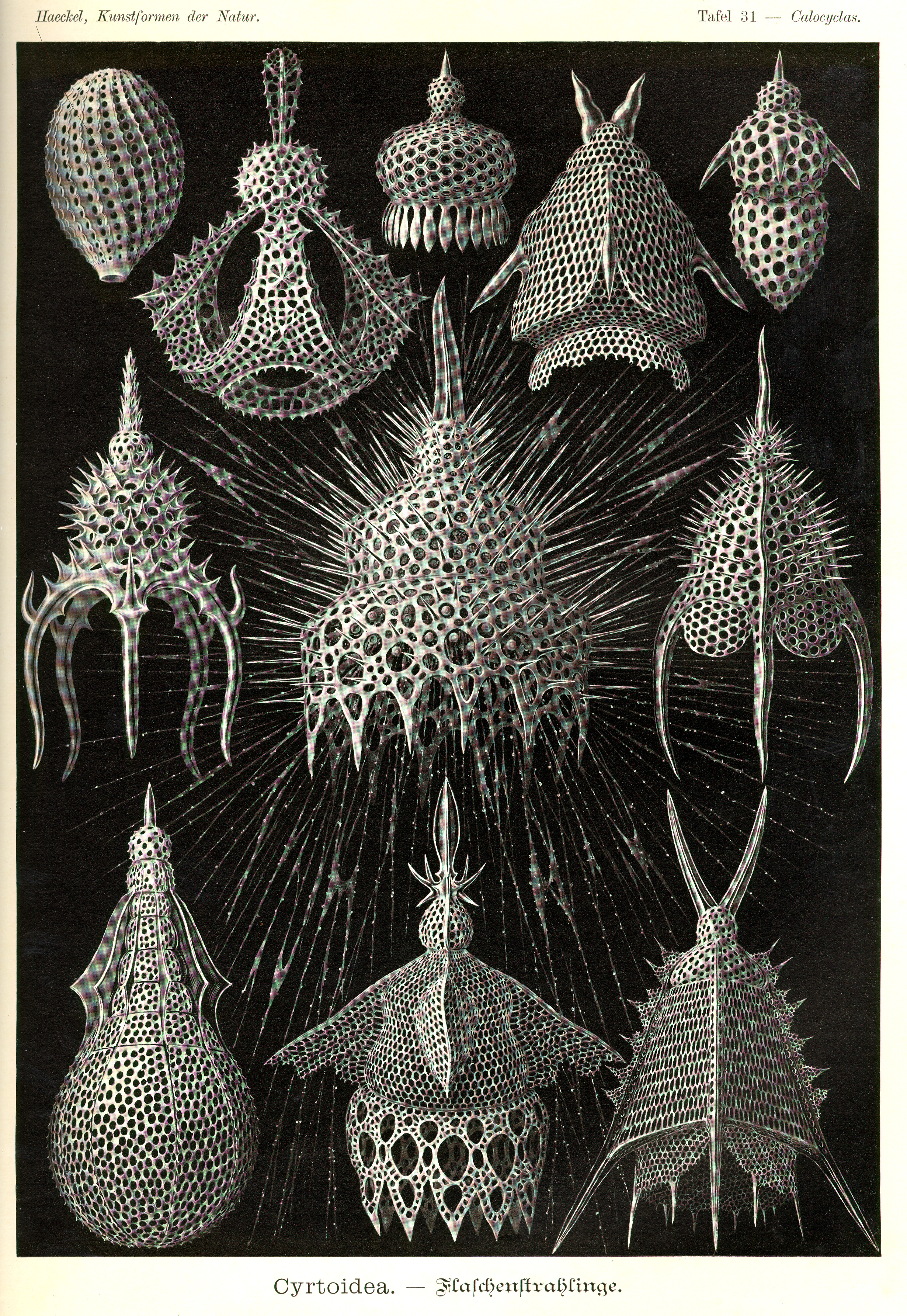
Radiowhales
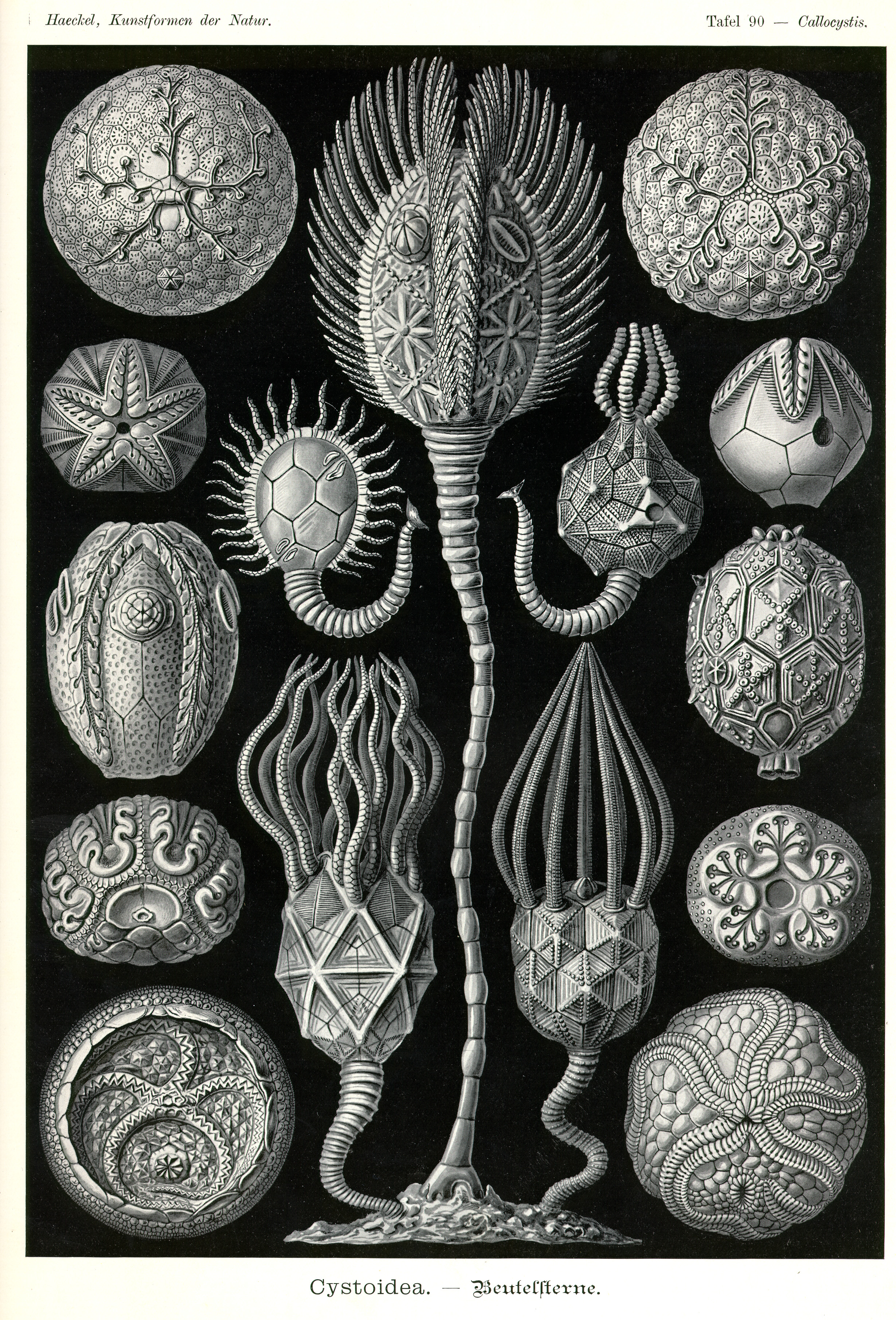
Tassled tesselated suns of ridges & spines fall through the light
the unseen made seen in an oceanic flight through the seas of time,
a morphology rhythmed & rhymed in its complexity, spiralling
downward to meet itself, slowly rotating in its inevitable descent.
Only gravity's lament could rise to join the disintegrating frills,
globes, wings or stars of the sinking stellium. Hills are an accumulation of sunshine speckles,
once they were arms, armatures fickle breast plates that failed the test,
spines, spires & curlicues come to rest in death's dark garden,
all night shadow, yet we see white, hardened stone, green downland:
whalebacks built from tiny bones no bigger than sand grains.
Day Atoms
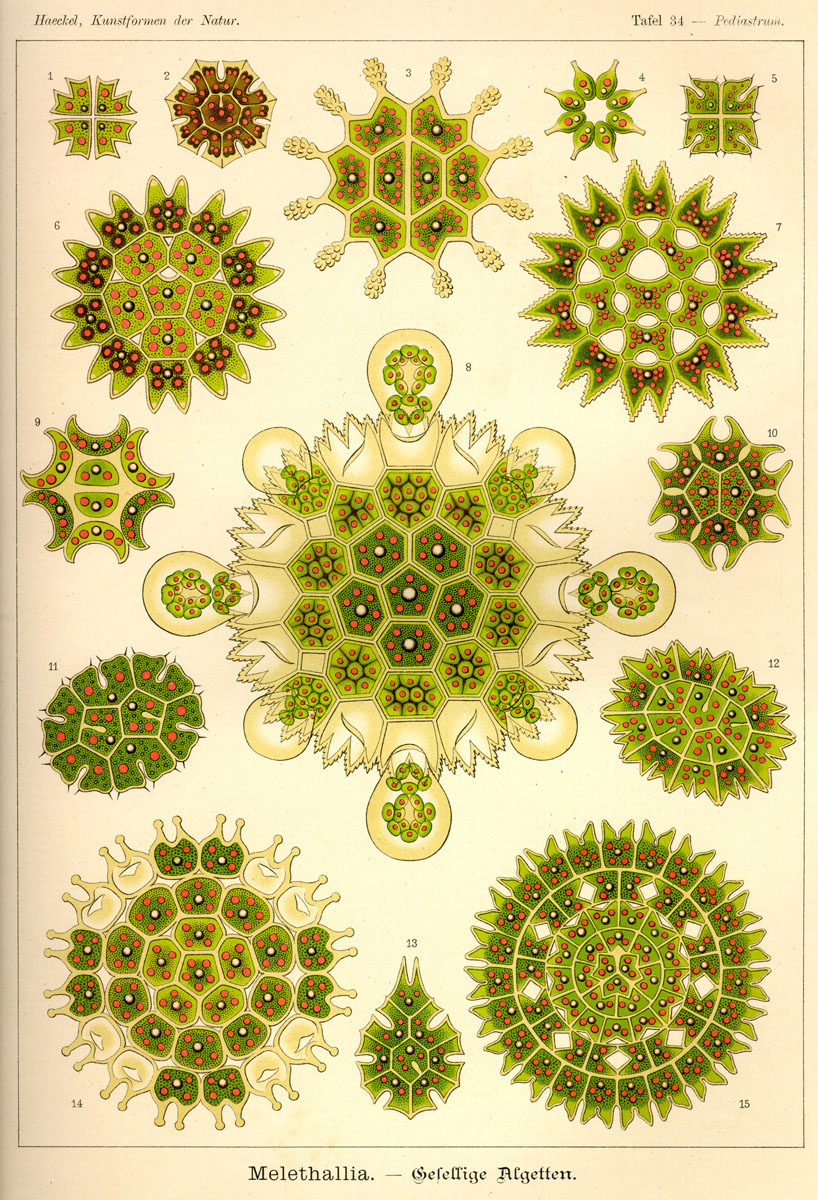
The brown bloom upon the rock is a geometry of mandalas & crescents, tubes & triangles
that jerk or slide smoothly within the tangled fibres of the colony,
shine green or gold, ochre yellow or red but only when seen clearly.
They look like dirt but they are lively & lovely in their own way,
on a slow migration across the surface of the day, hungry for photons,
the most ancient ones, the oxy-concatenators, light loving synthesisers,
delicacies hidden in their hat-box, jewellery box, earring bright wafers,
on rhythmic daily journeys, secret flavours, sucked into the hairy, funnel mouths
of rotifers & stentors, heading south among the digestive membranes
or caught upon the spiny vanes of the larger filter feeders who rule the puddle.
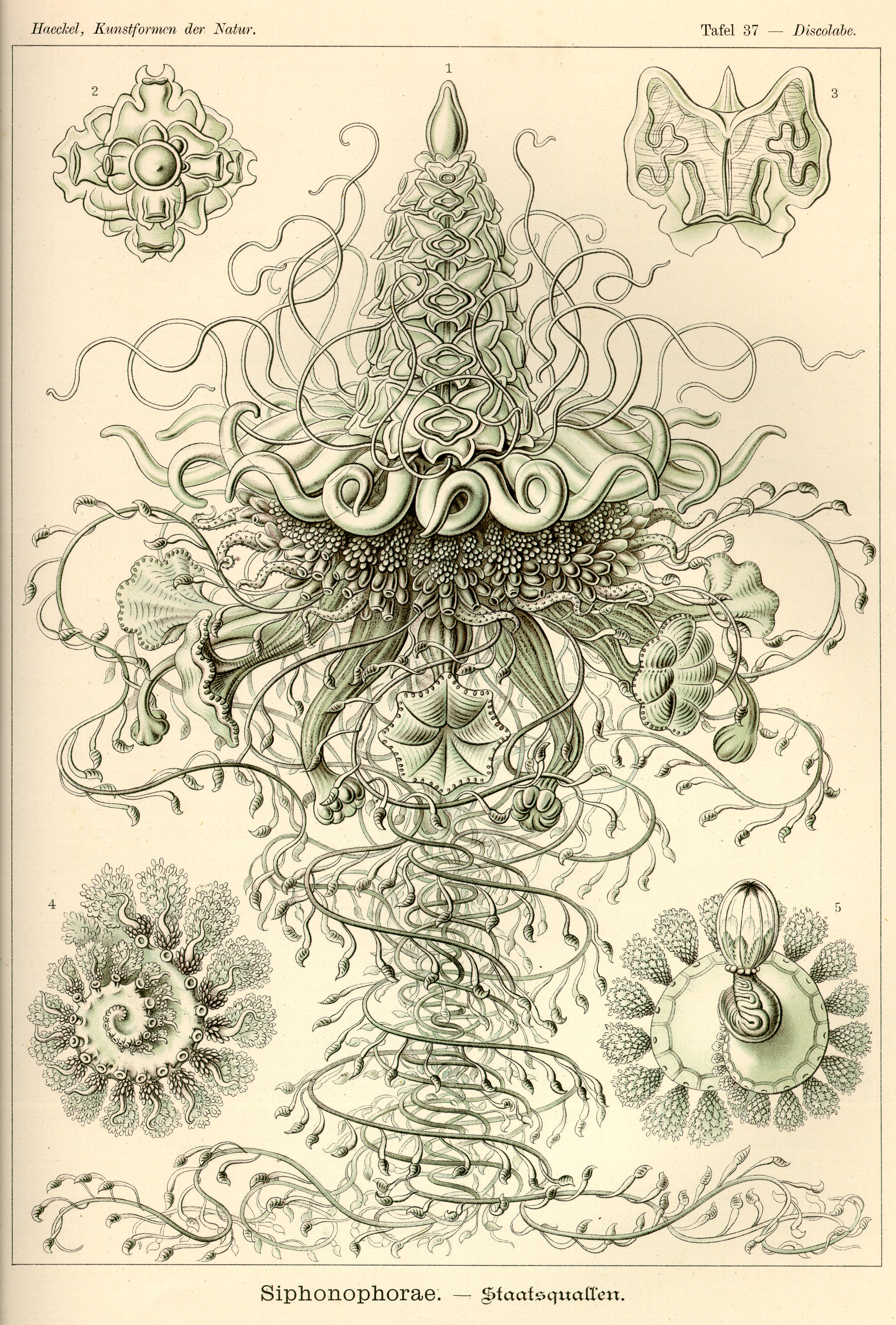
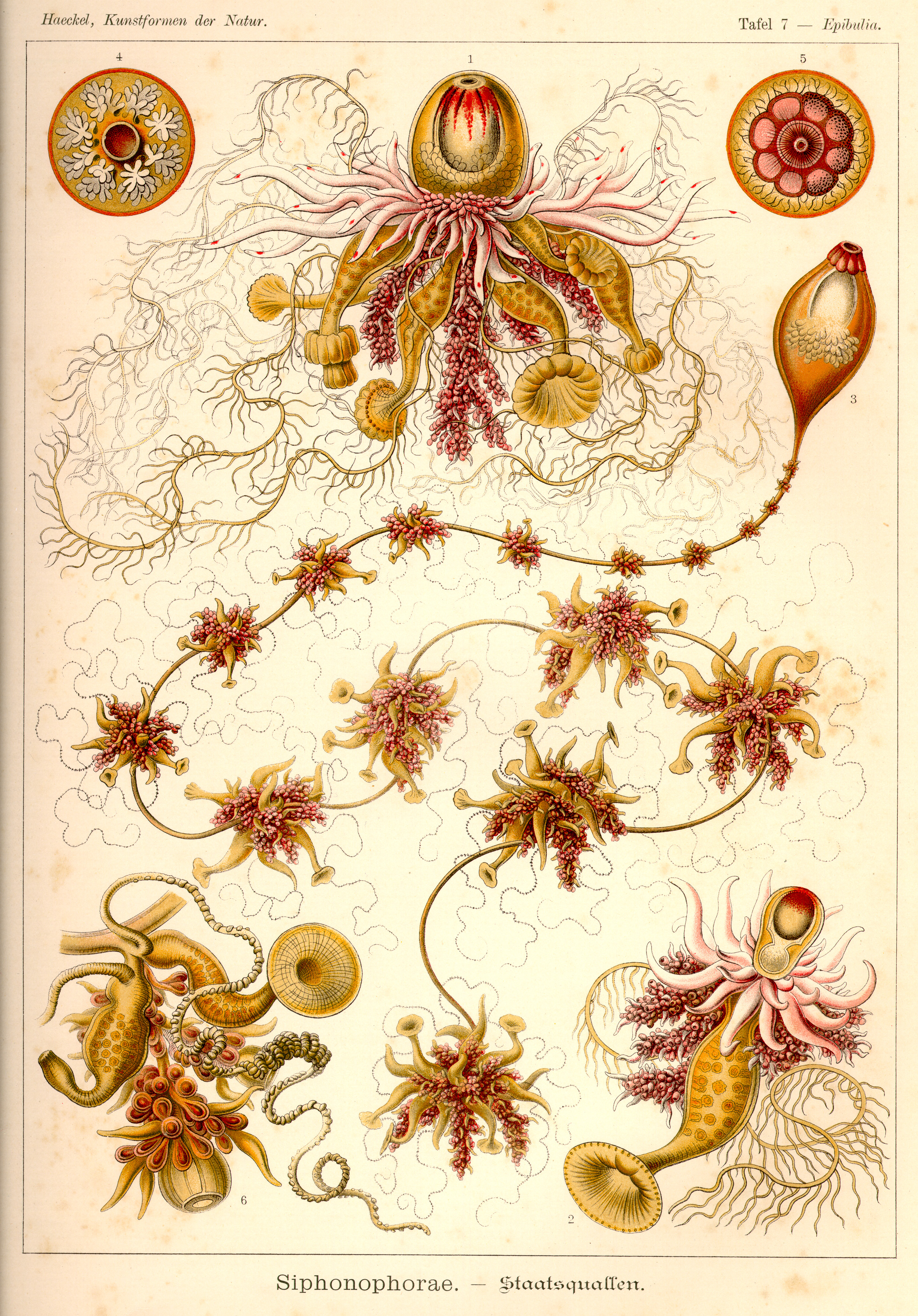
Sucking it Up
In their flowery hats they twist & turn in the pool,
all tendril & tubule, like a Howard Phillips nightmare,
all their organs laid bare, wetly shining on the outside
with their wide wild, star-shaped mouths flinging blind tentacles
into the invisible current, spectacular breasts & phalli
in thicket bunches & boquets, mucus gleaming
naked for all to see like that statue of Artemis from Ephesus,
hungry for whatever the primal waters will deliver
struggling to escape the inevitable river of death
delivered into the ciliated, fringed & filligreed maw of the immobile beast.
Ferny Animal Rosebud
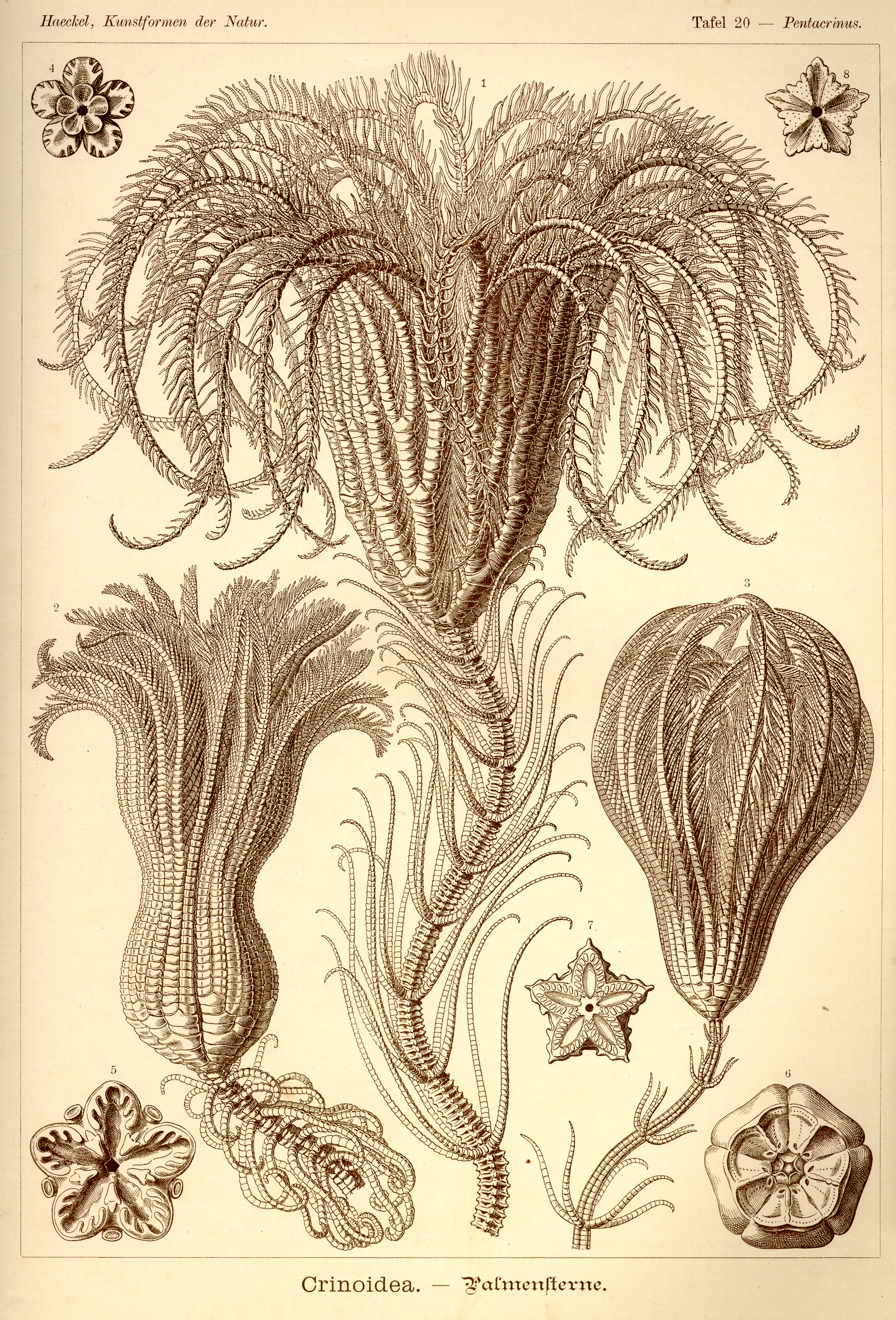
The swaying crinoid colours of the Palaezoic Garden
are not yet lost to us, not all yet hardened into fossil etchings, bas-reliefs
or tangled sculptures of once life; vertebral stems still survive;
the leggy, ferny rosebud heads still rear, alive, waving
their feathered arms & gnarly little legs like ravers at a wild sea bed party
off the coelocanth haunted coasts of Indonesia
where their beautiful but hardy Cambrian Crowns
down, deep in the tropical waters,
remind us of so much that we have lost
now known only from books or museum dioramas.
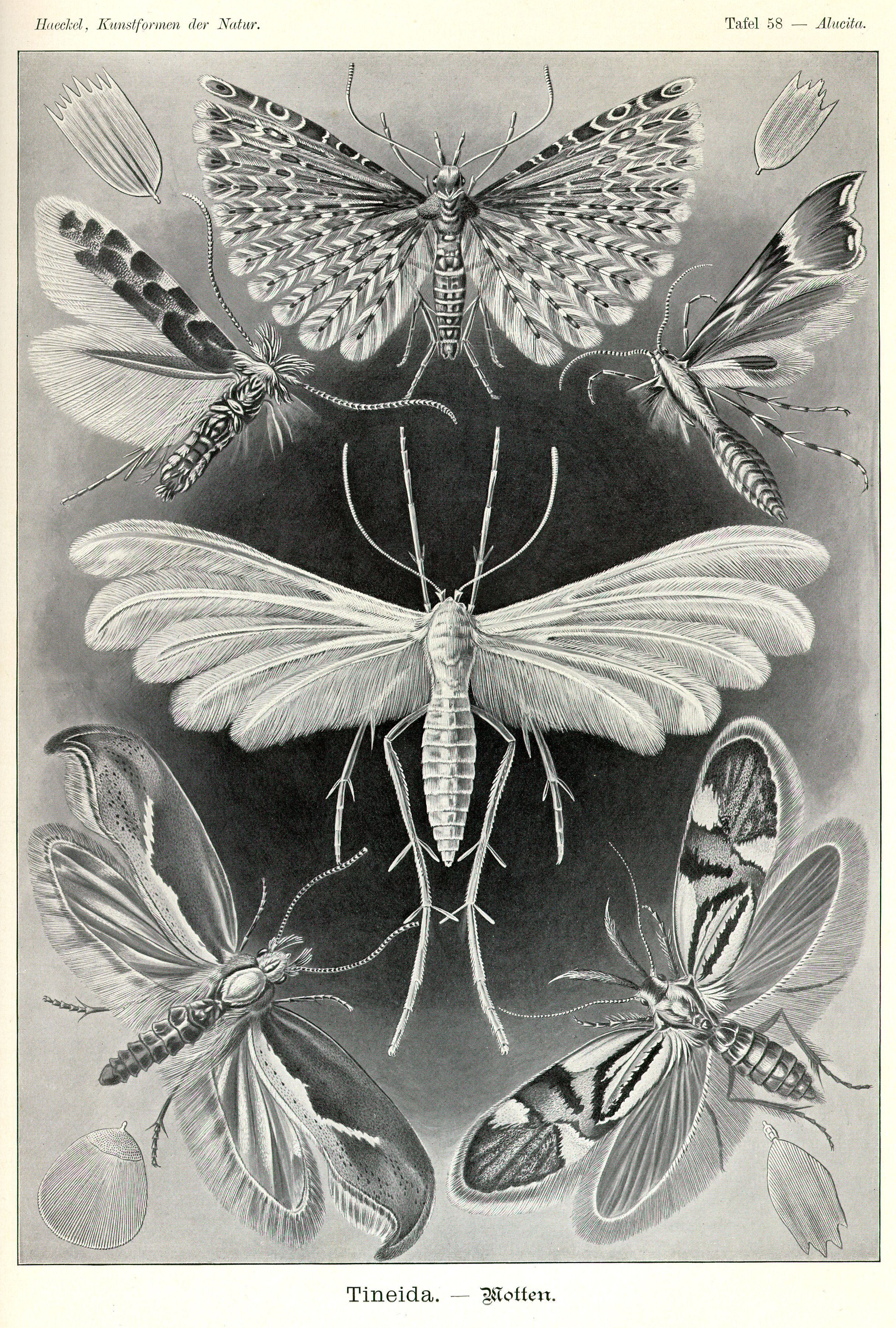
A Moment of Tiny Time
They look as if they are hurrying to a party
shedding scales as they uncharacteristically flee the light
for the shadow; are their plumes & fringes camouflage or display?
Rendered in monotone like an old newspaper photograph
of society's finest, snapped by some punk reporter
on their way to a gala of The Gilded Age
spurs, spines & antennae all presented flawlessly,
as they launch themselves into the ball,
the nineteen twenties flappers of the insect world
dancing at the end of their time.
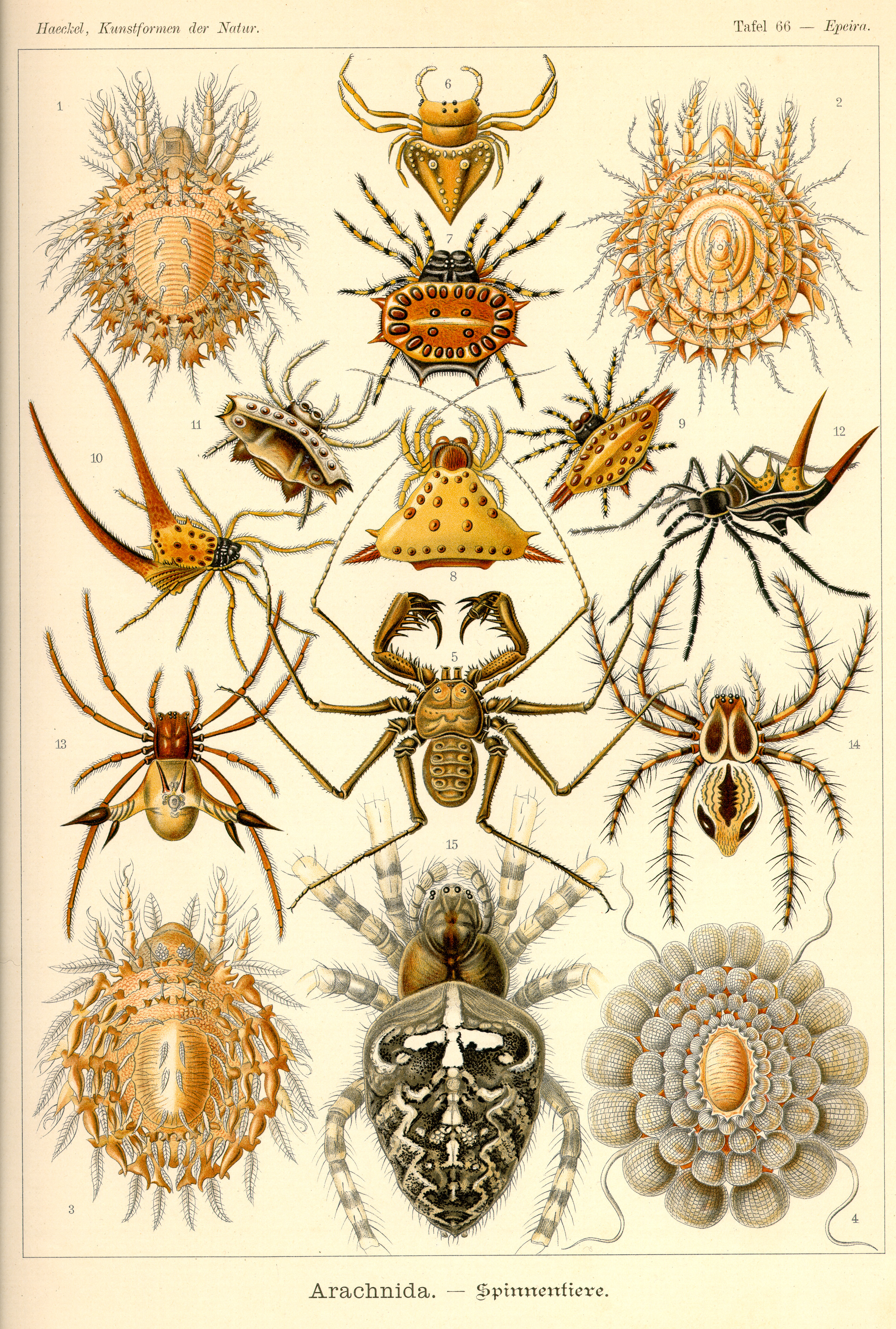
Leggy Maze Bright
You could open some camphorated drawer to see them
shrivelling on their pins, casting shadows upon the board
with little tags to tell you who they are, the names of their families,
or in well sealed jars of ghastly, filmy fluid
like comically scary ghosts in children's drawings
their legs curled in that monstrous grasping at nothing
death posture: the spiders, mites, ticks & vinegaroons
the solifugids & the scorpions
rendered beautiful this once, not creepy for the phobes:
they are not predators, but victims of the human mind.
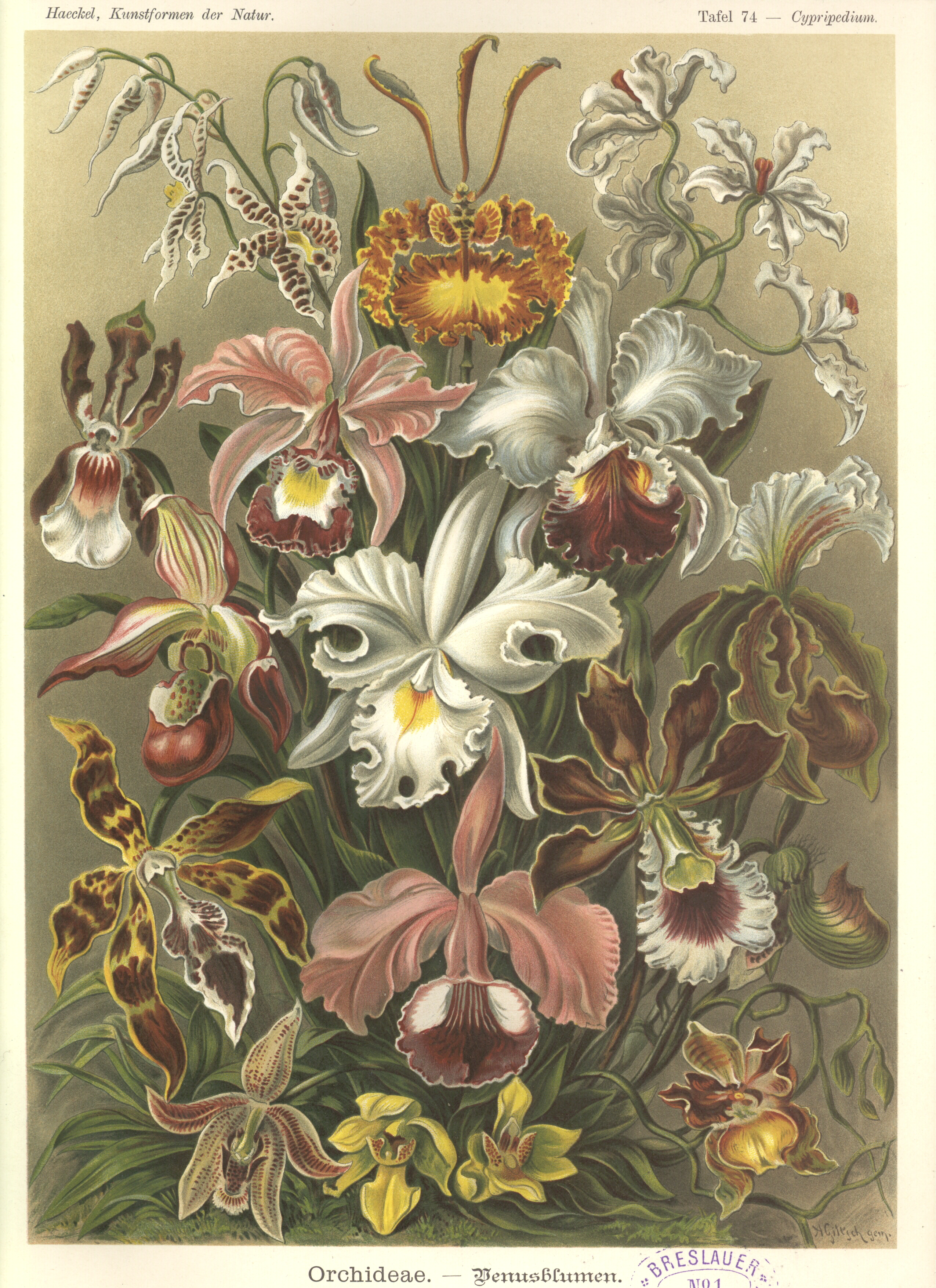
A Flower?
They don’t have teeth, but they look hungry
or angry, like a crowd of them are ganging up on you
coming in for the kill, or some kind of consummation
are they here to bite you or to kiss you? The orchids
assemble like animals; hissing, howling & smacking their lips,
the vivid dyes of their tepals & stigmas seem too lurid to be alive
waving, flapping or trailing like scarves & streamers
as writhing, they advance towards you,
flapping, trumpeting & gesturing their inevitable victory
straight out of a hellscape in a Fleischer cartoon.
==
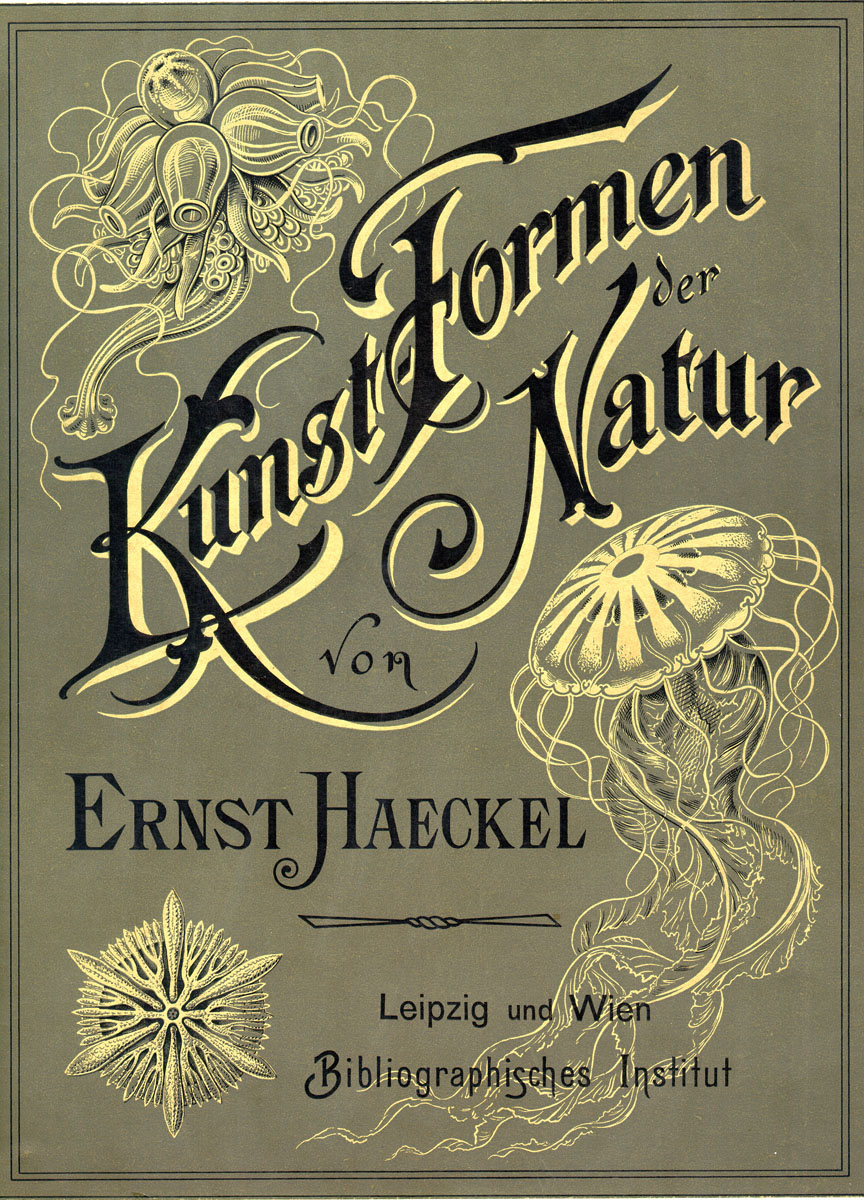
Ekphrastic poems inspired by the art work of Ernst Haeckel, 1834-1919.
Haeckel’s art work includes over 100 detailed, multi-colour illustrations of animals and sea creatures, collected in his Kunstformen der Natur ("Art Forms of Nature"), a book which would go on to influence the Art Nouveau artistic movement. He wasn’t a very right on chap politically but I just love this book. Incidentally, Haenkel’s Law of Recapitulation, which says that ontology recapitulates phylogeny, IE that embryos go through stages of development which correspond to the stages in our evolution, was debunked long, long ago. (Just for the record.)
I sometimes wonder if that gentleman of Providence, Mr. Howard Phillips Lovecraft, once perused these pages & shuddered. Ye who know, know; ye who do not won’t want to.